
WRITTEN BY Cedric K. H. Goh, CGD ART STUDIO
Edited Dec 19th, 2025. © All Images Copyright 2024 by CGD ART STUDIO, Unless specified otherwise .
Content
The art of creative creating unravelled.
…………………………………………………………………………………………………………………………………
1. Defining the process of creating
2. Learning creativity
3. Finding creativity
4. The personality in creativity
5. Insightful creativity : the pinnacle level
1. Defining The Process Of Creating
Is creativity an art or science? Do we need to be artistic to be creative? Is it a left brain or right brain activity? Does a creative effort involves logical analysis or irrational intuition or both? There are countless answers and literature on this subject. There are also myths and beliefs associated with the innate ability to be creative. Is creativity really a difficult skill to master?
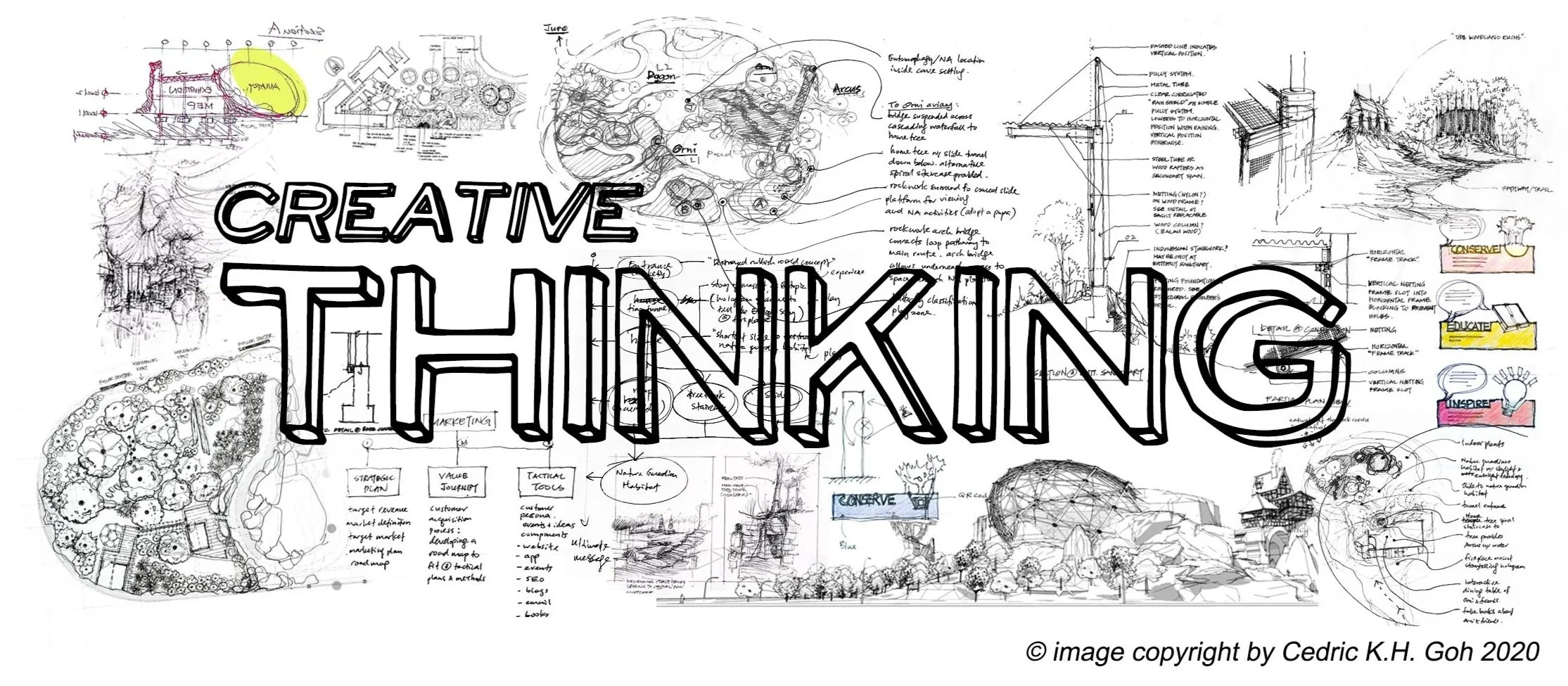
Anyone can create. The question is whether our creation is seen as a creative effort or simply the result of a logical reasoning exercise. In his article, James Hopkins defines creation as an “outcome of much higher order of thinking”. The dictionary defines creativity as using something original and inventive in the process of creating. In essence, if something unique has to come out of our thought process, that usually means it cannot be acquired knowledge or anything that is already known. In other words, creating is about not knowing. It is about using prior knowledge and an unusual thinking process to reinterpret context and conceive something entirely new. Or perhaps it could be a solution derived from a unique integration or combination of existing elements through a proficient iterative process. In the article on abandoning originality to be creative, Jullianne Chung interpreted creativity as ‘integration’ : an outcome of learning to spontaneously integrate contrasting elements to arrive at a solution. Fundamentally, the process may or may not produce anything novel, but rather it creates opportunities to study a vast range of possibilities beyond simply being original. This is in stark contrast to the standard definition of creativity - originality.
If creativity involves a complex integrative approach to our thought process, then the process of creating can be aptly defined as finely honed thinking skills and techniques developed through years of practice and training. Adapting from Damien Newman’s concept of the “squiggle”, my interpretation of the creative process involves four sequential stages of thinking :
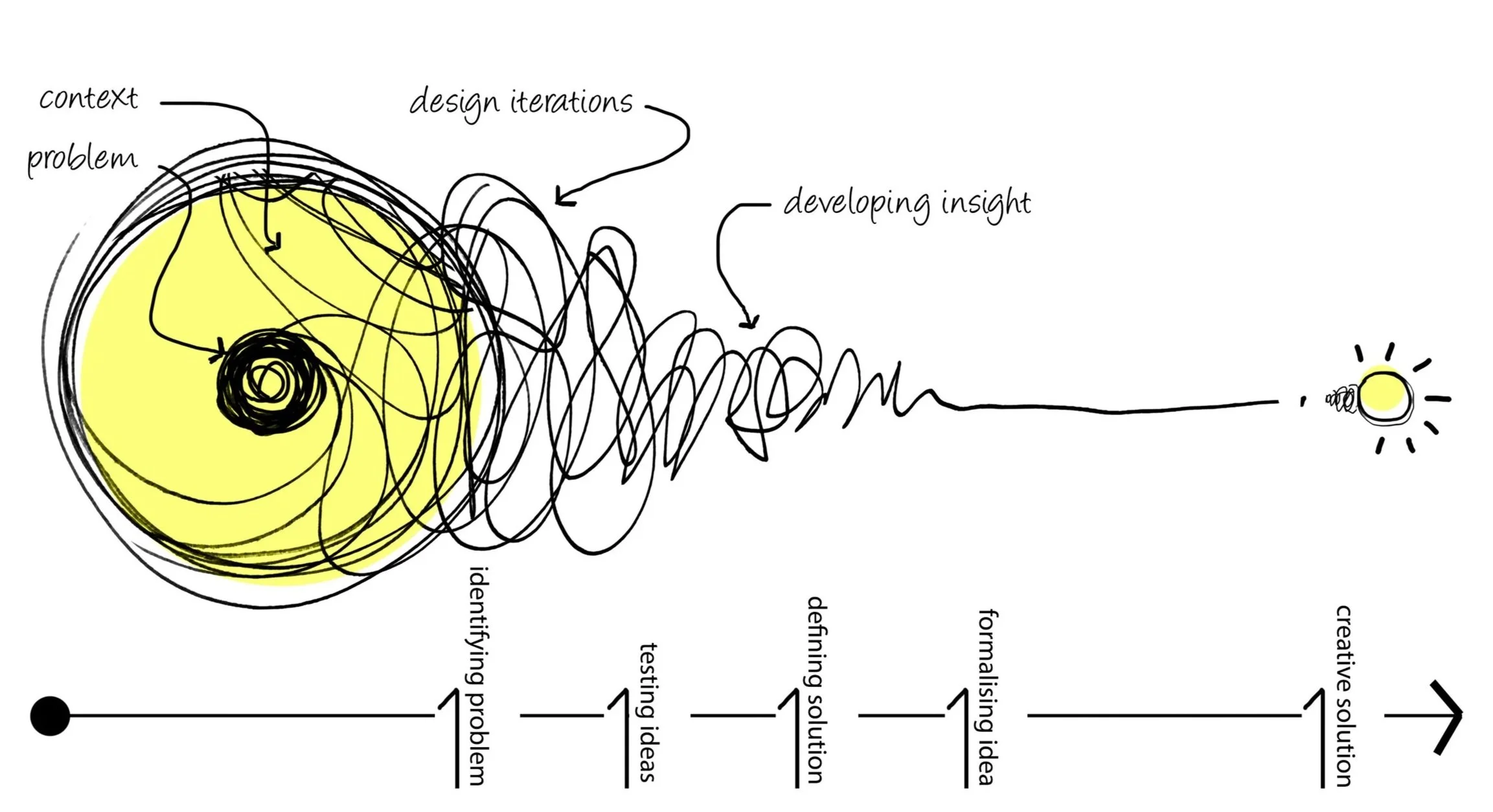
Figure 1 : The Creative Thinking Process. © Image Copyright 2020 Cedric K.H. Goh ( adapted from the “squiggle” by Damien Newman 2006 )
1-A : Identifying Problem
Every great creative solution starts with an equally gargantuan problem. Without a clearly defined problem we would not know what or how a potential solution can solve. When articulating the problem, we must also define the contextual boundary of the problem. The context provides a clear understanding of how the problem is confined by a set of elements or conditions.
“Creativity is not about simply creating for the glorious euphoria surrounding celebrated works of art or great concepts, it is about harnessing the latent creative aptitude to discover truly beautiful solutions.”
1-B. Testing Ideas
This is the stage where endless variations of ideas and concepts are tested against the identified problem. Drawing on prior knowledge, experience, research and current references, we begin to find common ground and spot relationships during this stage of thinking. Design iterations will play a prominent role in this stage of thinking process. It is the most time-consuming and laborious stage shrouded with tremendous complexity and ambiguity. Our ability to connect the dots and find obscure relationships will lead us towards breakthrough ideas.
1-C. Defining Solution
Upon reaching the end of the iterative design stage, we should have found an acceptable level of clarity between the problem and a potential solution. This is the time where we begin to assemble and integrate elements of the solution.
1-D. Formalising Idea
With a rough version of a solution, we will then be able to move on to formalise the idea by refining it and testing it again in the problem context. At this point, a solution may seem like an end itself. However, to have a profoundly inspiring and creative solution requires a deeper clarity both in the problem and the solution in order to distill ideas, concepts and thoughts into its primal elements. It is only when we have the grit to continuously iterate and integrate, can we discover truly creative ideas.
Tanner Christensen in his article on ” A Snapshot of What Drives Creativity “, identified four distinct thinking processes when combined, further explains how such a complex thinking skill is mastered over a period of learning and practice :
Divergent - the ability to think in a diverging way, studying multiple possibilities.
Convergent - the ability to integrate ideas and find commonality.
Persistent - the ability to stay at a problem long enough to allow other processes to iterate.
Flexible - the ability to keep an open mind and continuously explore possibilities.
Mihaly Csikszentmihalyi on the concept of ‘flow’ says that it is the state of concentration and engagement that can be achieved when completing a task that challenges one's skills. This psychological concept describes the mental state of a person who is engaged in the creative process. One that truly involves an analytical thinking technique, iterative and integrative complex thinking techniques to attain a sophisticated level of creativity.
2. Learning Creativity
The Educational Process -
Learning the creative process is reflected in the journey of going through design education, in which the specific knowledge required, the methodology of developing solutions are taught. The complex thinking process, developed by going through that design learning, produces no specific answers, no absolute solution but only ideas, concepts and the skills required to reach for answers within the context given and be able to arrive at a plausible solution. Tanner Christensen defines creativity as — the ability to think of ideas which are both novel and valuable—is a skill anyone can learn. Much like math, science, writing, or a foreign language.
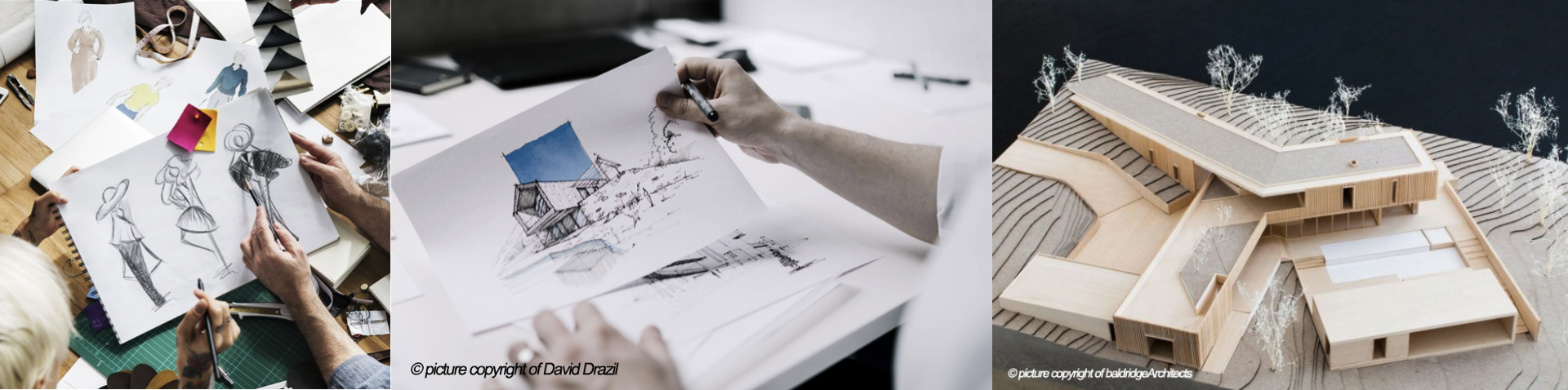
Figure 2 : Various industries approaches the creative process in a rather similar way
“Creativity is a type of learning process where teacher and pupil are located in the same individual.”
Why ideas or concepts? Ideas are driven by our desire and passion to explore; whereas having answers means we have found a perfect solution. It is that same perfection that unfortunately hinders creativity and will effectively end our search for creative answers. Paradoxically, it is that constant search for answers that drives design iteration. Creativity is not just about an act of creating or the notion of invention. It is about a journey to explore a problem or an issue and in the process, discovering ideas. Ideas are therefore not created, but discovered. The act of creating rather than discovering will greatly alter the fundamental value of the design solution. Instead of a beautiful idea, it could be simply just a forced egotistical representation of our narcissistic self.
The Self-Learning Method -
Self-learning requires tremendous amount of discipline, intrinsic motivation and perseverence. Creativity has a lot to do with persistant trying. Hence, those same qualities that we need to succeed in life is clearly applicable to learning creative thinking. Paying attention to Tanner Christensen’s framework of thinking skills [ shown in Figure 9 : “what causes creativity“ ] will be sufficient to guide us in mastering the science of creative thinking.
3. Finding Creativity
Tanner Christensen’s article mentioned that, In “The cognitive, emotional and neural correlates of creativity” researchers Matthijs Baas, Carsten DeDreu, and Bernard Arjan Nijstad referencing research spanning the past 53 years, nicely explain everything we know to-date about what causes creativity :
“ Research has shown that creative outcomes are a function of multiple cognitive processes, including divergent and flexible thinking, the use of flat and broad (as opposed to steep and narrow) associative hierarchies, convergent and persistent thinking, and incubation-driven processes. ”
Formulating The Thinking Process -
Searching for that elusive creative spark is challenging. There is no switch to turn on, no quick fixes, no system to implement to facilitate the occurrence of any creative outcome. For creativity to occur, a complex and laborious thinking process must begin first. Without going through that thinking process, nothing would happen. From that, we can infer that creating can be defined as the application of finely honed thinking skills to the process of discovering something unique. Perhaps then the realm of creativity will exist between what we know and what we don’t know. That is because going through that thought process does not involve known knowledge, it is most likely context that which is given. Within that context is an intangible space in which the ambiguity drives our mind to explore and reach for ideas or solutions. In our search, we may or may not find the perfect solution or answer but the path to greater understanding of the problem itself. Through that understanding comes a plausible solution, though we must always be wary of the fact that there will always be a better solution. Knowing that there is always a better solution keeps us grounded and continuously exploring for better ideas. That is the hallmark of someone who has the capacity to be extremely creative. Tanner Christensen in his article “ Which attributes really matter for creative success? “ said :
“Grit…is what allows creative geniuses to keep pressing on through failures and bad ideas in order to uncover truly valuable concepts….This is especially true for creativity, which regularly entails the act of encountering false positives or discouraging results. For example: Thomas Edison and his team of inventors tested some thousand or more variations of filament for their lightbulb before ending up with the unique carbon version.”
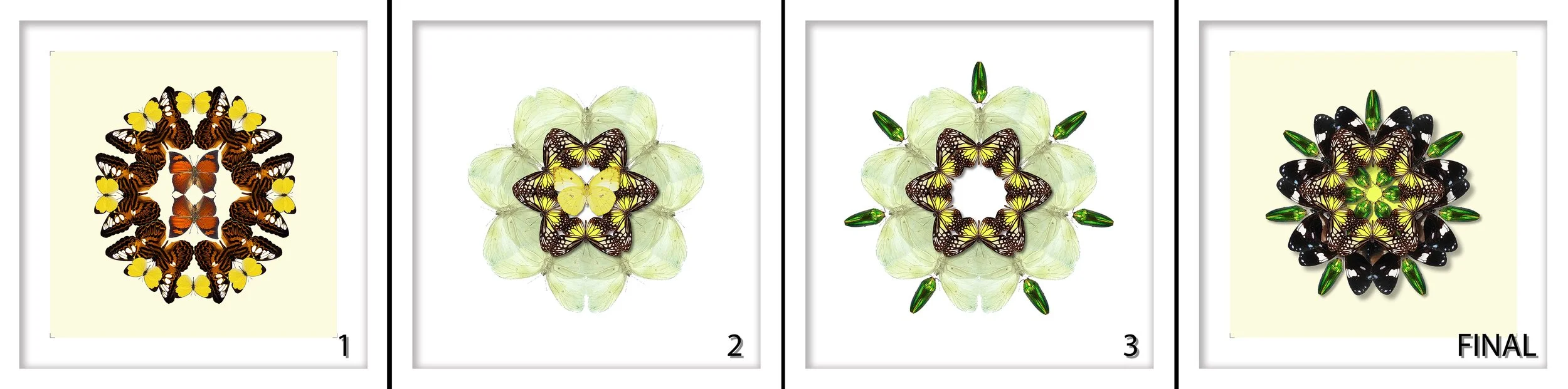
Figure 3 : In developing designs for the butterfly specimen frames, the creative iterations explores the problem from different angles. Background, types of specimens, justaposition, color schemes, and arrangement in order to arrive at an acceptable level of design quality shown far right as FINAL design. © Image Copyright 2020 Cedric K.H. Goh
An Evolutionary Process -
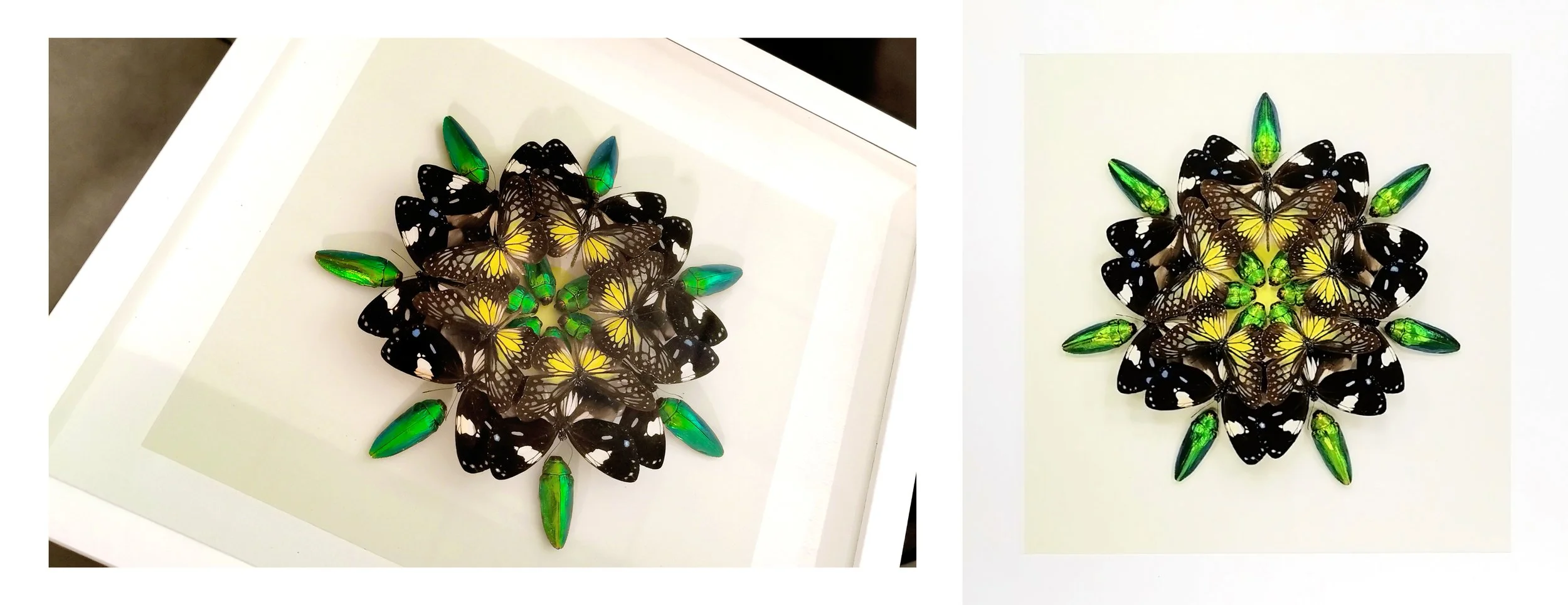
Figure 4 : The final product after pinning of specimens and framing work completed. © Image Copyright 2020 Cedric K.H. Goh
From that perspective, design is to a certain extent - an evolutionary process because there isn't a way to "manufacture" a solution. A creative answer must be discovered through a process of learning and unlearning, exploring and consolidating. As we embark on that creative journey, our thought process evolves in response to problem context and testing hypothetical scenarios. A tireless journey between knowing, contemplating the unknown and finding a way through. That is the essence of being on a creative journey. You may ask what has evolution got to do with creativity? Because if there is a perfect or an ultimate solution, there will never be such a thing as evolution. Hence, the way to find that creative inspiration is to immerse ourselves into the context of a problem, engage in a deep iterative and integrative thinking process and creativity will most likely flow without us even knowing.
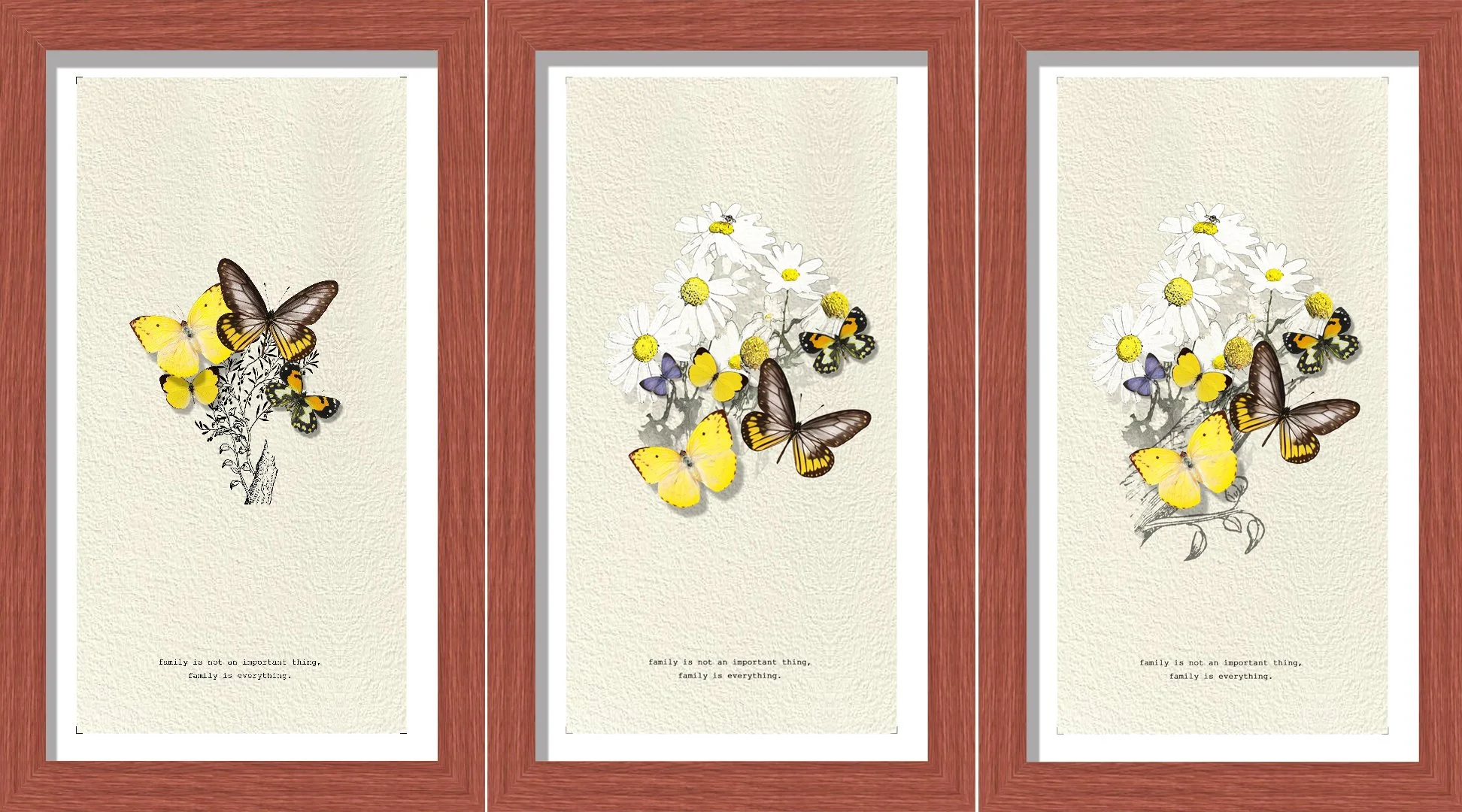
Figure 5 : Is an example of evolutionary design process. In terms of composition and design, all three can stand on their own. However, looking closely you can see there is an incremental design change from left to right. The composition on far right is richer and more creatively expressive. Whereas the one on far left shows creative restrain and minimalistically uncluttered. © Image Copyright 2020 Cedric K.H. Goh
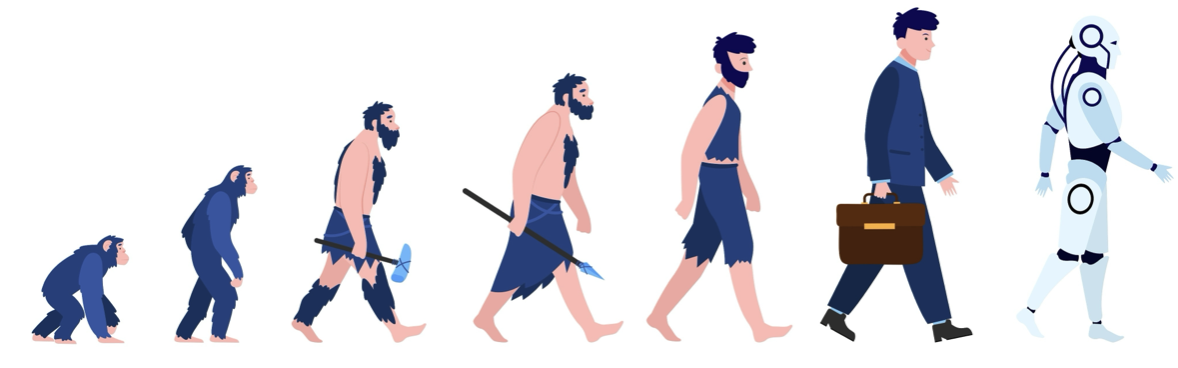
Figure 6 : Evolution ( Image credit : <a href="https://www.freepik.com/vectors/people">People vector created by pch.vector - www.freepik.com</a> )
Figure 5 and 6 illustrates the parallel in terms of an evolutionary process, where one is not drastically distinct from the subsequent version, but carries similar traits or elements of the previous one albeit an imporved version. Although jumping a few version and you can see a much bigger difference. In evolution, one may not be entirely better than the other, but an altered version in response to context and changing surrounding determinants. Similarly in creative thinking, If we can understand our method of thinking and refine the process, then we will be able to find the flow of creativity much easier.
4. The Personality In Creativity
Given the fact that creativity occurs in our thinking processes, we can argue that personality or an individual’s formal education would have had influence on our creative approach. Some who may be dominant left-brain thinkers would have a more structured approach to creative problem solving whereas a right-brain person will allow his or her mind to float and explore seemingly unrelated concepts or ideas and finding ways to consolidate and integrate. Even then, similar right or left-brain thinkers may well have individual idiosyncrasies and varying permutations to that approach as well - simply because we are all different and each one of us have vastly different personalities.
Choosing a particular way to develop a solution does not make a person more creative in problem-solving. That is just a style an individual consciously chooses in addressing the identified creative problem. A good design solution is born out of a challenging problem requiring an effortlessly beautiful and functional solution. Human beings have been creative problem solvers, from being a cave man figuring out how to use a stone tool to cut meat, to absolutely determined individuals ( The Wright brothers, 1903 ) wanting to create a flying machine. What makes a solution creative is how effective it addresses the problem and how beautifully executed is the solution, not just only how pretty or stylish it looks.
Many professionals are in various creative industries, from film to art, fashion, graphic, architecture and et cetera. Different people with different personality will likely have a different approach to the creative process. Perhaps the most obvious of all are the highly visible individuals - charismatic, extroverted and incredibly outspoken and perhaps intimidating. These individuals tend to favor a particular creative approach.
Creativity + Style -
Style is seen as a predominant creative outcome pursued by countless creative professionals in the history of design. These are instances where a particular technological material breakthrough, the 19th Century utilitarian movement or varying economic conditions, can drive a particular use of system or material which dictates how solutions are developed. This will restrict ( or force an unusual creative exploration on ) any creative individual’s ability to derive outcomes. Parallel to that, there are also individuals who chooses to favor a particular approach or method in their creative endeavors, resulting in solutions with a consistently similar outcome. In those cases, style is driven by a person’s ego in wilfully approaching a problem context in a predictable idiosyncratic approach. This is perhaps due to the person’s ego or alter ego, unconsciously or consciously restricting oneself to a limited number of ways to approach a problem. This method produces an extraordinary similar solutions or strikingly similar outcomes. We gave it a name and called them “style”. That particular style may be in vogue due to its popularity and being accepted by other creative individuals and general public as an ingenious solution, it will be indelibly inked in our history book known as a style in that particular period of time. Not a right or wrong approach, but rather a consciously subjective way in their process of creating. Although one might argue that perhaps some actually are such creative talents and that they created products which became a style or a trend. As clearly visible in the fashion industry, trends are created by designers who are at the vanguard of their own industry.
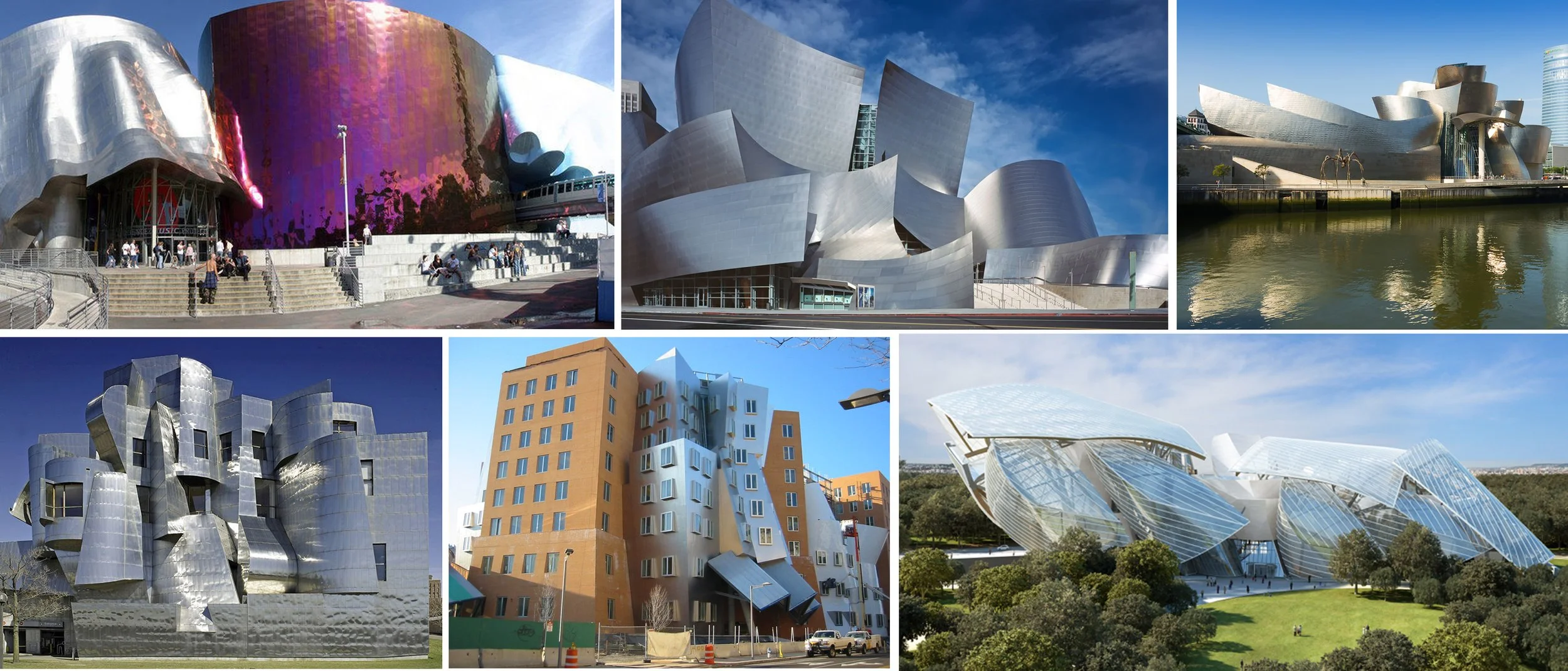
Figure 7 : Architect Frank Gehry’s deconstructionism buildings illustrating a singular approach to its design process.
Architect Frank Gehry exemplify a deconstructionism architectural style in almost all of his work. [ Figure 7 : thumbnail snapshots ] His selected building materials, space planning, facade and fenestration may change according to programmatic elements, but the formal architectural language remains strikingly similar. Perhaps this is due to years of practicing an idiosyncratic creative thinking process, integrating that with his very personal experiences would result in a very similar building typology in all his built projects.
On the contrary, architect Renzo Piano’s work [ Figure 8 : thumbnail snapshots ] follows a different thinking process, choosing to find creative inspiration from materials, construction means and methods, context and et cetera. Rather than trying to follow a particular thinking methodology, perhaps he alternate his approach based on the context of the problem itself. Regardless of how he creates, what we can be sure is that his work does not follow a particular style or show any sort of stylistic resemblance among his project.
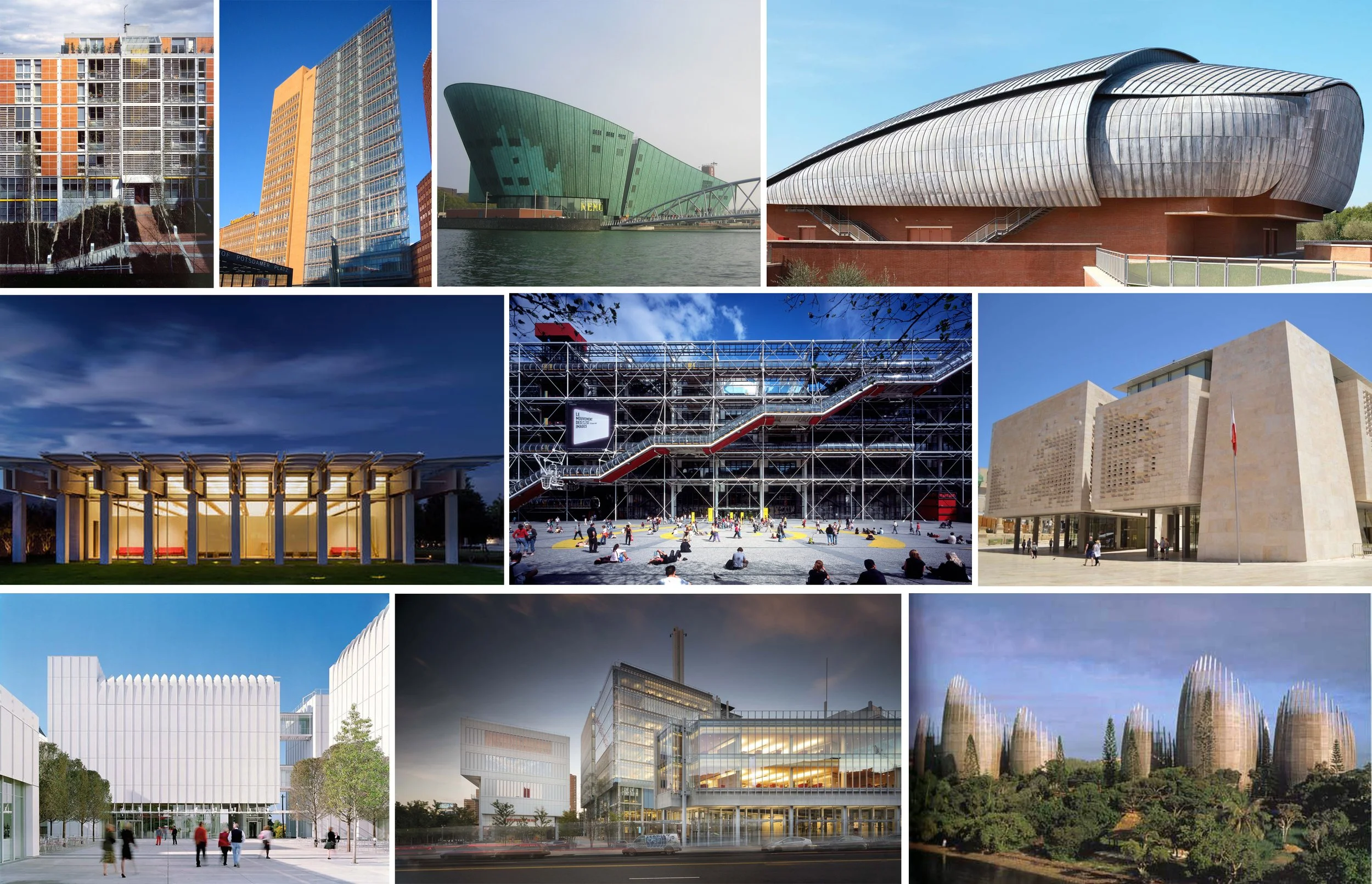
Figure 8 : Architect Renzo Piano’s work articulates an unusual breadth of design languages.
Comparing both architects’ work, we can see that perhaps an alter ego is playing its part in driving design decisions on Frank Gehry’s work. On the contrary, Renzo Piano perhaps consciously chooses to approach every project from different perspectives including construction methods, believing that context and the creative brief changes so should the building. Regardless of how each architect develops their own personal creative thinking process, we can be sure that personality plays an important role in an individual’s ability to find and utilize creativity.
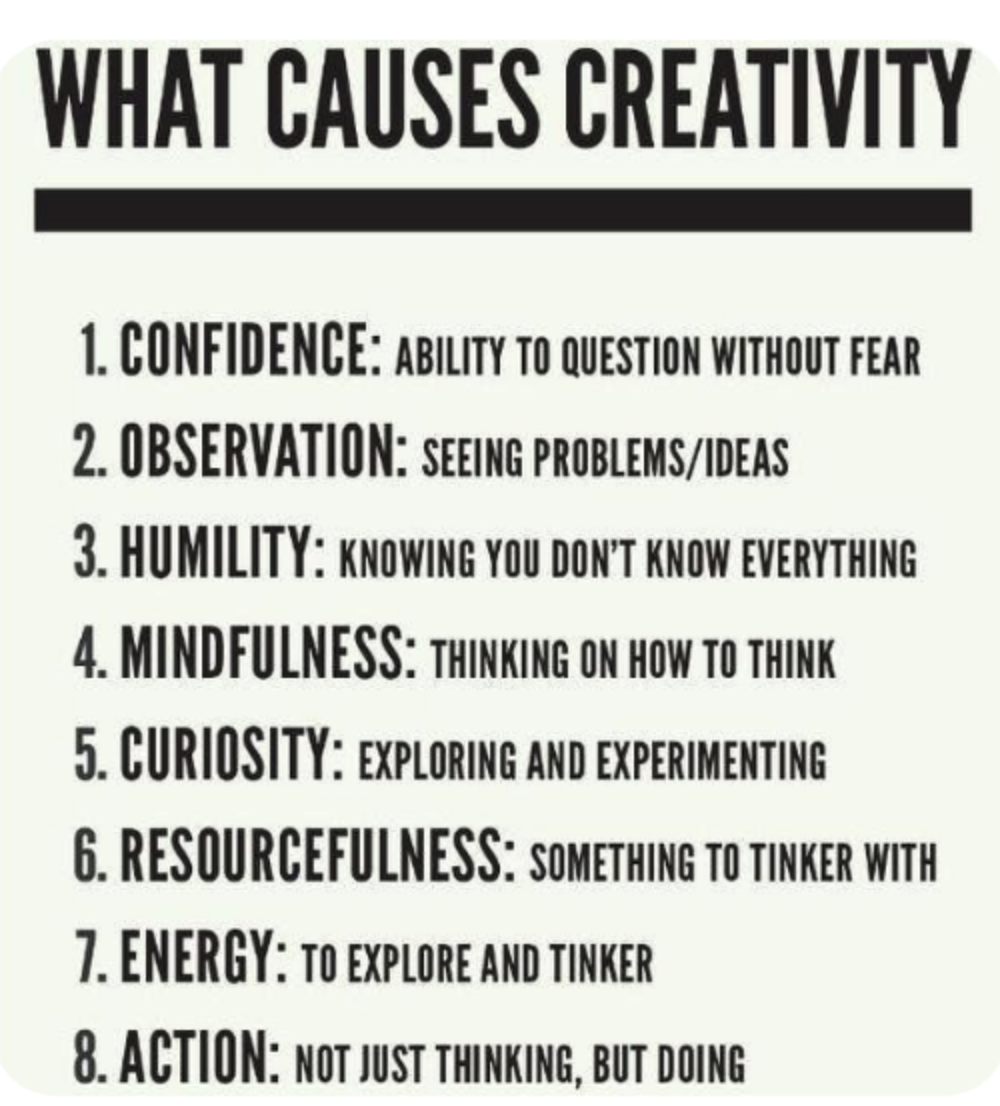
Figure 9 : © Image credit Thinking skills by Tanner Christensen via creativesomething.net
Creativity + Creating Freely -
Contrary to creating stylistically is to create freely, unrestricted by any preconceived method or style. But to create freely, we must release our ego to let our minds roam and have the imaginative mind of a child. As previously mentioned how personality could play a part in influencing our design process, it is vital to be mindful of all the elements affecting how we approach creative thinking including our ego. If our subconscious ego is allowed to rule in the creative process, it is very likely all other character traits and thinking skills will take a back seat, essentially leaving us only one method [ ego ] of coming up with a solution.
Once we are able to use our unemcumbered mind ( imagination ), we can use our thinking skills to direct and release our creative thoughts in the way that we want. To talk about thinking skills, it is unquestionably valuable in sharing Tanner Christensen’s clearly articulated [ shown in Figure 9 below ] framework of thinking skills required for creativity to exist. When delicately balanced and mindfully orchestrated, these set of skills guide us on how we can approach creative thinking.
Our ability to be unencumbered in our creative thinking while using also our repertoire of skills and professional knowledge in developing solutions, is the key to being a highly flexible and honest creative professional. It is incredibly respectable to show integrity in the use of our skills to develop outstandingly creative works, as opposed to dictating creative solutions with our personal style, preferences and idiosyncrasies. To reach that level, we must find joy and sense of professional accomplishment through being the servant solution provider. Similar to the servant leadership philosophy, we are there to serve as stewards of the hidden solution patiently waiting to be revealed. Though there are times when we will need to oscillate between various styles of leadership depending on context and situations. In a similar way, the process of creative thinking involves alternating between different thought processes and analytical methods to find appropriate solutions to problems. On a personal level, I do adhere to a set of guiding principles, they are :
1. be AWARE : be deeply aware and understand the problem context.
2. be EGOLESS : maintaining objectivity throughout the stages of creative thinking.
3. be INQUISITIVE : allow our mind to wander and find seemingly incongruent connections.
The principles to achieve true freedom in creativite thinking is like any leadership lesson, respecting them will unleash our ability to be exceptional thinkers. The following are some butterfly specimen frame design works to illustrate the outcome of creative thinking without being shackled by our own controlling idiosyncratic tendencies.
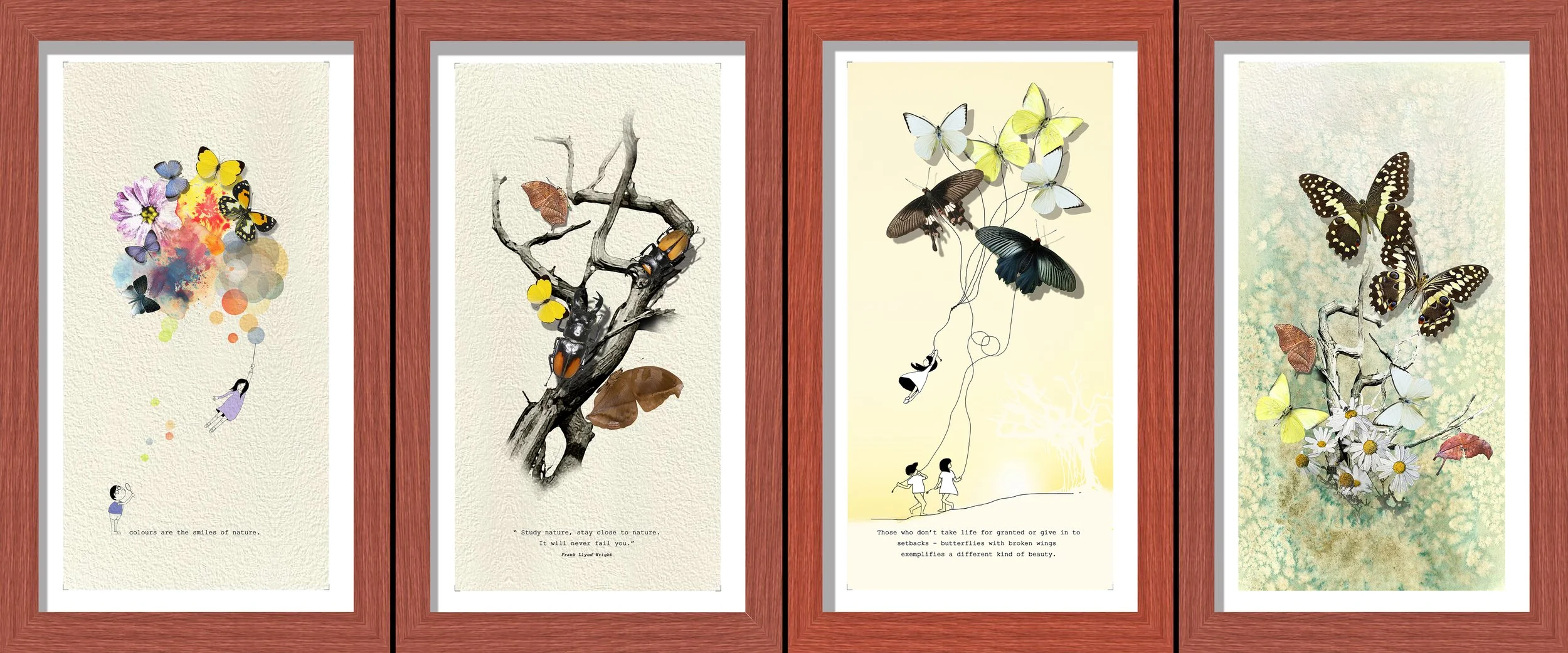
Figure 11 : © Image Copyright 2020 Cedric K.H. Goh
5. Insightful Creativity : The Pinnacle Level
Our ability to create freely will ultimately give us the freedom to attain insight when we take on creative challenges every single time. An insightful perspective creates clarity in every facet of a problem or a creative brief. This clear insight of every problem is the most important element in the approach towards articulating a creative solution.
Zaid K. Dahhaj believes that, becoming an insightful person takes a lot of effort and work. It requires that we put our ego aside and become humbled to the process of life and growth. This critical character trait is the key to unlocking the highest level of creativity. It is having that ability to suppress our ego in order to develop an insightful perspective. Insight brings a completely different dimension to creativity. Instead of being shackled by our subconscious ego, we will be able to draw on our variable thinking skills to encourage creativity at the highest level. The premise of this level of creativity is having the grit to revisit the ( design ) problem and context again and again in order to redefine a better solution, even upon arriving at an acceptable one.
Sometimes, we must dwell deep within the problem, allowing an opportunity for the solution to present itself. It is that powerful ability to draw insight from the unencumbered process of creative exploration - immersing ourselves deep within a given problem, while drawing from a wide range of knowledge and personal design experiences to eventually arrive at a creative solution. This type of insightful creativity demands an intense problem solving process rather than plowing through references for some eye-catching emulated solutions. In a way, creative iterations are like evolution : going through an incredibly slow design process, resulting in an array of living creatures evolving to adapt uniquely to their habitat. Then again, evolution may not be just by design, but rather a "natural process". Still, whichever way we look at evolution, it is still an iterative process to solve the problem of survival. On the contrary, an egotistical and forceful design intent that does not address the context of the problem effectively, says little about the product's need to be in existence hence limiting its inherent clear representation of a solution, lacking that sense of creative honesty.
Our innate capacity to solve problems creatively and respond to our environment is the most crucial aspect of the anthroposcene period. It is a crucial learnable thinking skill that has given us, the human race, tremendous advantage in adapting and thriving, but of course supported immensely by our desire to be imaginative. Without thinking of the impossible, the sporadic flashes of imagination, we would not have come this far as an animal species. As Lance Baker with his article in Assemblage puts it, "Life is most beautiful and exciting when we are creating, birthing, exploring, and manifesting the things we want to see in the world — not just defending them from threats and intrusions.”
References
Julianne Chung, “ To be creative, Chinese philosophy teaches us to abandon ‘originality’ ”, assistant professor of philosophy at York University. Published Sept 1st, 2020 ( www.psyche.co )
Tanner Christensen,” Which attributes really matter for creative success? “, published September 16, 2014 ( https://creativesomething.net/post/97665597595/which-attributes-really-matter-for-creative )
Lance Baker, “ How Defensive Thinking Limits Creativity and Makes You Less Insightful“, published May 14th 2020 ( www.medium.com )
James Hopkins, “ Creating or Creativity? ”, published September 2017 ( http://blog.core-ed.org/blog/2017/09/creating-or-creativity.html )
Tanner Christensen,” A Snapshot of What Drives Creativity “, May 15, 2015 (https://creativesomething.net/post/119026623556/a-snapshot-of-what-drives-creativity?rq=what%20causes%20creativity )
Zaid K. Dahhaj, “ How To Develop The Skill Of Gaining Insight & Skyrocket Your Personal Growth”, Nov25,2018 ( https://medium.com/@zaiderrr/how-to-develop-the-skill-of-gaining-insight-skyrocket-your-personal-growth-ad445051ca0 )
William R. Klemm Ph.D., “ Insightful Thinking: How to Do It “, published Nov 5th 2014 (https://www.psychologytoday.com/us/blog/memory-medic/201411/insightful-thinking-how-do-it)
Tanner Christensen,” Creative Isn’t Something You Become “, published May 15, 2015 ( https://creativesomething.net/post/2018/5/5/creative-isnt-something-you-become )